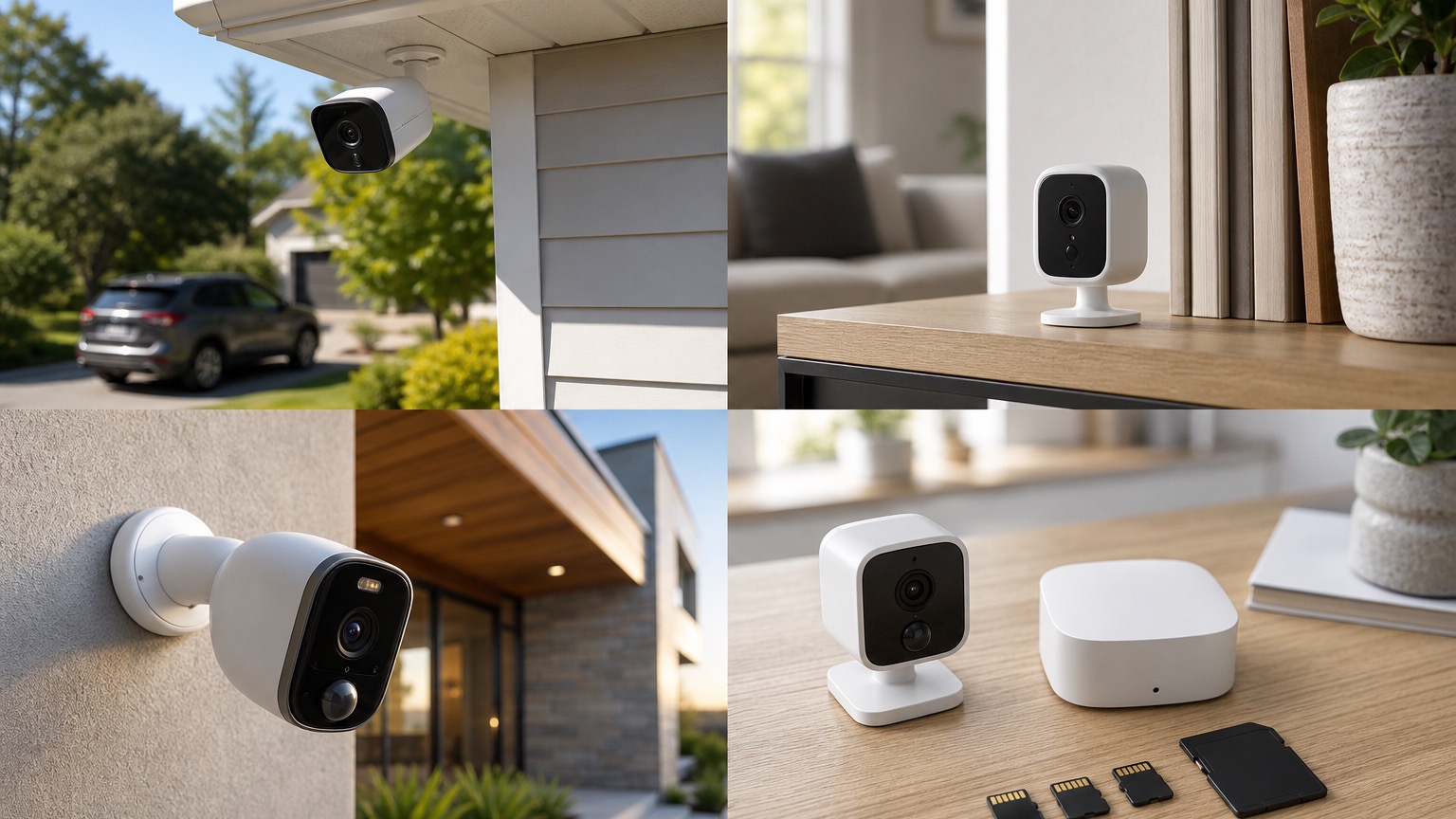
Outdoor security cameras are no longer a one-spec purchase. A sharp image matters, but so do the way a camera gets power, what it records without a subscription, whether its app fits your household, and how it behaves on a humid night when a porch light is doing half the work. This is a research-based update using current manufacturer specifications and published product information, not a fresh hands-on test of every camera here.
For most homes, the best choice is the camera that covers a real entry point reliably without creating a subscription surprise later. That is why this guide separates wired value cameras, battery cameras, floodlight and spotlight cameras, and local-storage-focused options instead of pretending one model fits every driveway.
Quick picks for outdoor camera buyers
Best premium wireless setup: Arlo Pro 5S 2K. Choose it when flexible placement, a more polished camera experience, and 2K video are worth paying more for. It makes the most sense for homeowners who want several cameras around entrances, not for someone who only needs one inexpensive porch view.
Best for Alexa households: Ring’s 2K outdoor lineup. Ring refreshed its outdoor camera range in 2026 with Retinal 2K models, including new Spotlight Cam and Floodlight Cam options. The practical advantage is more detail around driveways and side yards, plus familiar Ring and Alexa integration. The catch is that cloud history and some smarter alerts are tied closely to a Ring plan.
Best low-cost wired add-on: Wyze Cam v4. It is a sensible budget camera for a covered porch, garage side door, or a spot with nearby power. Its appeal is local microSD recording and a lower entry cost, not a whole-home replacement for a professionally supported system.
Best simple battery coverage: Blink Outdoor 4. Blink remains the low-friction choice for a shed, gate, or other location where running power would be annoying. It trades image detail and advanced controls for straightforward wire-free placement and long battery life.
Best for buyers avoiding recurring fees: a local-storage camera ecosystem. Reolink and eufy are worth comparing if local recording and lower ongoing costs are more important than the smoothest app or the broadest smart-display integration. Read our best cameras with no subscription guide before deciding, because local storage still has setup and retention tradeoffs.
What changed for outdoor cameras in 2026
Ring’s May 2026 announcement made 2K video a more accessible option across its new outdoor lineup, with retail availability beginning in June. That does not automatically make an older 1080p camera useless. It does make the older-versus-newer Ring decision clearer: buy the current 2K hardware when you need a camera now, or only choose older hardware when the discount is meaningful and you accept lower detail.
The more useful change for shoppers is not just resolution. Higher-detail video helps only when a camera has a clean angle, enough light, a stable Wi-Fi connection, and a plan for retaining clips. A 2K camera aimed across a dark, wide driveway can still be less useful than a well-positioned 1080p camera with a focused motion zone.
How the leading options compare
| Camera family | Best use | Power approach | Storage question to ask | Watch-out |
|---|---|---|---|---|
| Arlo Pro 5S 2K | Premium flexible coverage | Battery, with optional accessories | Which features need Arlo Secure? | Higher hardware and service cost |
| Ring Spotlight or Floodlight Cam 2K | Alexa homes, active driveways and side yards | Varies by model | How much history do you need from Ring? | Subscription dependence for the fullest experience |
| Wyze Cam v4 | Affordable wired coverage | Wired | Will you add a microSD card? | Needs a convenient, weather-safe power route |
| Blink Outdoor 4 | Simple wire-free perimeter view | Battery | Do you want cloud clips or a Sync Module setup? | Less detail and fewer premium controls |
| Local-storage ecosystem | Fee-conscious, privacy-focused owners | Varies by model | Who will manage cards, hub storage, and backups? | Convenience can be less polished |
Buy by location, not by marketing label
Front door and porch
A video doorbell is usually the first device to compare for a front porch. Use an outdoor camera only when you need a wider street, package, or driveway angle than a doorbell can provide. Avoid pointing a camera directly into a neighbor’s private space, and use privacy zones where the app supports them.
Driveway
Driveways reward lighting and field of view more than a headline resolution number. A floodlight camera can be a good fit where it replaces existing outdoor lighting and you can provide stable power. A battery camera is easier to install, but frequent motion from cars, trees, and pedestrians will shorten battery life.
Side yard, gate, or shed
These locations are where Blink and other battery cameras earn their keep. Before drilling, stand at the proposed mount point with your phone and test Wi-Fi. A camera that looks connected during setup but regularly drops off the network will miss the events you bought it to capture.
Subscription and storage math
Do not compare cameras using hardware price alone. Make a three-year estimate that includes recording, person or vehicle alerts, cloud retention, and any hub or microSD card you will actually need. The right answer changes by household: a subscription can be worthwhile when you need easy clip sharing and searchable history, while local storage can be better when recurring fees and cloud retention are your priority.
Read each plan’s current terms before buying. Features, retention periods, and bundled-device allowances change more often than the camera hardware. If you are considering a larger alarm package alongside cameras, compare it with our best smart home security systems guide instead of treating camera storage and professional monitoring as the same purchase.
Privacy and reliability checklist
- Use a unique account password and turn on two-factor authentication.
- Keep camera firmware and the companion app updated.
- Set motion and privacy zones before relying on alerts.
- Check video quality after dark, not only in daylight.
- Test Wi-Fi at the actual mount point and reconsider placement if signal is weak.
- Decide who in the household can view, download, or share clips.
For a low-maintenance setup, keep alerts narrow. A camera that notifies you about every passing car becomes a camera whose alerts you ignore. Start with people and entry-point zones, then expand coverage after a week of real use.
Who should buy what
Buy an Arlo Pro 5S 2K setup if you want flexible premium wireless coverage and accept that its best features may involve a service plan. Buy a current Ring 2K spotlight or floodlight camera if your home already uses Alexa or Ring and you want a brighter, more detailed view around an active outdoor area. Buy Wyze Cam v4 when nearby power and local microSD recording matter more than a premium ecosystem. Buy Blink Outdoor 4 when simple battery placement is the priority. If avoiding monthly fees is non-negotiable, start with the local-storage comparison above rather than forcing a cloud-first camera into that job.
For more Ring-versus-Nest context, see our Ring Doorbell vs. Nest Doorbell comparison. For a Blink-first shopping list, see the best Blink cameras.
Frequently asked questions
Is 2K worth it for an outdoor security camera?
It can be, especially for a driveway or other area where you need more detail. Placement, lighting, Wi-Fi quality, and clip retention still matter as much as resolution.
Can I use an outdoor camera without a monthly fee?
Yes. Some cameras support microSD cards, hubs, or local recorders. Check what recording, smart alerts, remote viewing, and warranty support remain available without a plan.
How high should an outdoor security camera be mounted?
A common starting point is roughly eight to ten feet, adjusted for the camera’s field of view and the height of the target area. Mount high enough to reduce tampering but low enough to capture useful faces and activity.
Bottom line
The best outdoor security camera is the one that fits the exact spot you need to cover and the ongoing cost you are willing to accept. Ring’s current 2K outdoor range makes more sense than its older 1080p hardware for many Alexa households. Arlo is the premium flexible option, Wyze is the practical wired value add-on, Blink is the easy battery pick, and local-storage ecosystems are the right starting point for subscription-averse buyers.
Updated July 24, 2026. Product availability, pricing, subscriptions, and features can change. Confirm current details with the manufacturer or retailer before buying.