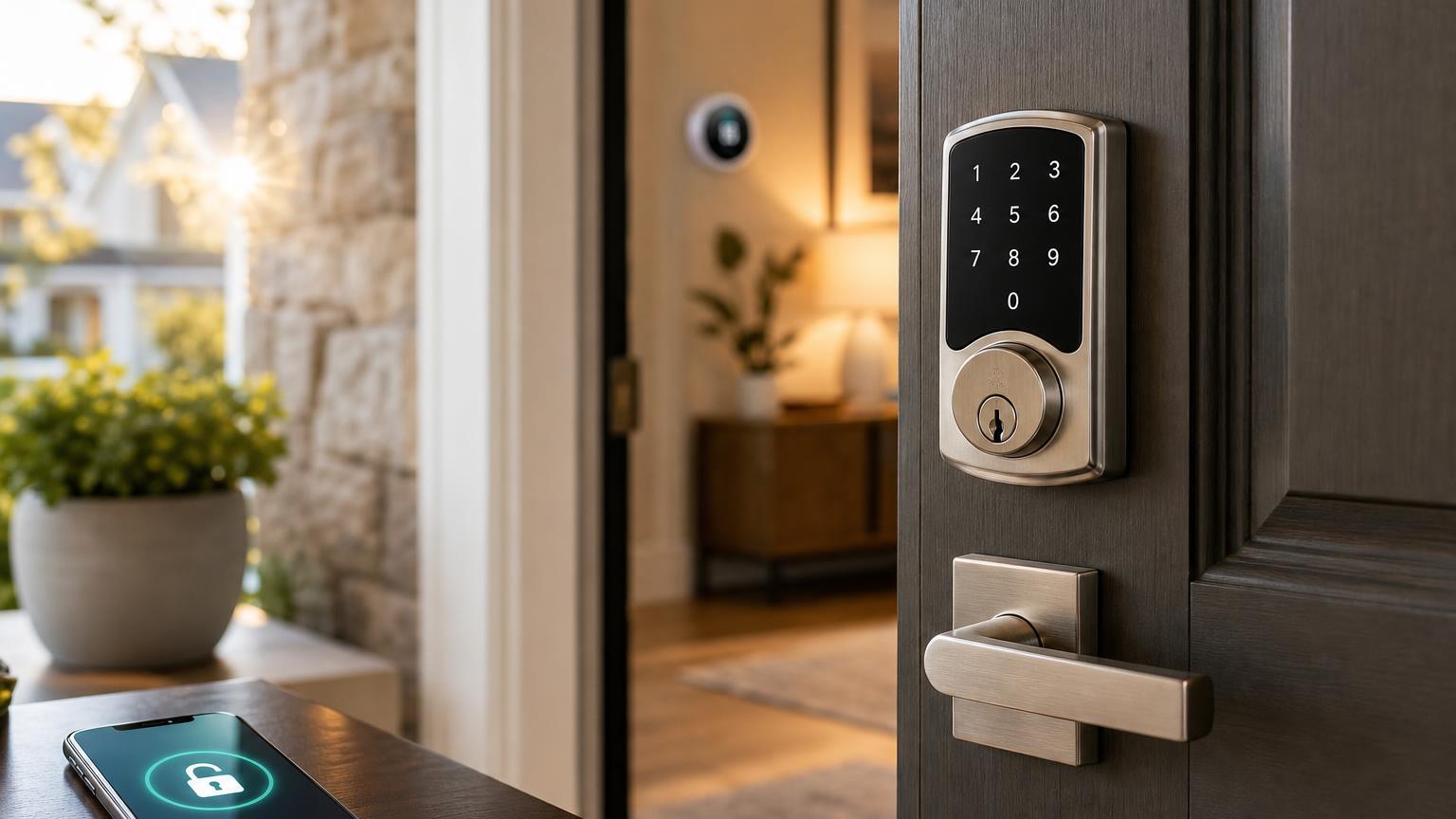
The best smart lock to buy in July 2026 is still not the flashiest one. Yale Assure Lock 2 Touch remains the safest recommendation for most front doors, Schlage Encode Plus is still the cleanest Apple Home Key buy you can make today, and Schlage Sense Pro has become the premium new lock worth watching now that it is actually on sale. The other big story is not a launch at all. It is the recent Level shake-up, which makes support stability and long-term platform confidence much more important than minimalist design alone.
The smart-lock shortlist got meaningfully clearer over the last two weeks. Schlage's Sense Pro moved from teaser to real product with a June 29 on-sale date and a $399 starting price. Yale and August continue to benefit from the late-May app refresh that improved battery visibility and general app polish. Then Level's restructuring under Assa Abloy introduced a new kind of buyer risk, not immediate lock failure, but uncertainty around long-term momentum, support attention, and whether it makes sense to buy into that ecosystem right now.
The Short Version
Buy Yale Assure Lock 2 Touch if you want the safest overall answer for most homes. Buy Schlage Encode Plus if Apple Home Key convenience matters most and you want a proven lock now. Look hard at Schlage Sense Pro only if you are comfortable paying more for a first-wave premium lock with a stronger future-facing feature set. Choose August Wi-Fi Smart Lock if retrofit convenience matters more than exterior style. Use Aqara U300 for side doors, offices, and garage-entry lever doors. Avoid treating Level as the obvious minimalist splurge until the company's long-term direction looks steadier.
What Changed at the End of June
Schlage Sense Pro matters because it is no longer hypothetical. Schlage announced on June 16 that the lock would go on sale beginning June 29 for $399, which turns it from an interesting future product into a real decision point for Apple-heavy households. The buyer question is finally practical: do you buy the proven Encode Plus now, or do you pay more for a new lock that promises Matter over Thread, built-in Wi-Fi, and a more hands-free arrival experience?
The answer is still more conservative than the marketing. Sense Pro absolutely deserves a place on the shortlist, but it has not yet earned the easiest recommendation. It is expensive, it is new, and it still needs more real-world owner history before it can displace the lower-regret picks. That matters in smart locks more than it does in some other categories, because day-to-day reliability, battery behavior, app recovery, and fallback access matter more than feature-sheet swagger.
The other late-June development is a different kind of signal. Recent reporting around Level's restructuring says the brand is continuing under Assa Abloy, but the shake-up was substantial enough that cautious buyers should stop treating Level as the default premium minimalist choice. Existing owners do not need to panic, but new buyers should weigh ecosystem confidence more heavily than they did a month ago. Our separate Level Home shake-up explainer goes deeper on what current owners and shoppers should do next.
Our Top Smart Lock Picks for July 2026
Best Overall for Most Homes: Yale Assure Lock 2 Touch
Yale Assure Lock 2 Touch remains the safest broad recommendation because it balances design, access options, and platform fit better than most direct rivals. It looks modern without feeling fragile, the fingerprint option adds real day-to-day convenience, and Yale's recent app work improves one of the most annoying parts of smart-lock ownership, uncertainty around battery health and connectivity friction.
The caution is still lineup complexity. Yale buyers have to confirm whether they are looking at the exact Assure Lock 2 variant that matches their priorities, because Bluetooth-only, module-ready, Wi-Fi, keypad, and fingerprint versions are not interchangeable. But once you sort that out, Yale still makes the most complete low-regret recommendation in this category.
Best for Apple Households Buying Right Now: Schlage Encode Plus
Encode Plus remains the better recommendation for Apple-heavy homes that want to buy this week instead of waiting for the market to settle around Sense Pro. Home Key is still one of the few smart-lock features that can feel genuinely delightful instead of merely clever, and Encode Plus delivers it in a package with a longer public track record than Schlage's newest flagship.
The reason Encode Plus keeps this slot is not that it is more exciting than Sense Pro. It is that the best lock to live with is often the one that already has a longer history of real installs, support troubleshooting, and predictable battery behavior. If your primary goal is a polished Apple front-door upgrade with less launch risk, Encode Plus is still the answer.
Best Premium New Lock to Watch Closely: Schlage Sense Pro
Sense Pro is the most important new lock in the category because it combines premium hardware ambition with a more current connectivity story. Matter over Thread, built-in Wi-Fi, and the promise of a more seamless Apple arrival experience make it more interesting than a cosmetic refresh. For the right buyer, that can absolutely justify the price.
I still would not call it the default pick on July 1. A $399 first-wave smart lock has to prove itself outside launch coverage. Buyers who love being early and specifically want the Sense Pro feature mix have a credible reason to go for it now. Buyers who mainly want the safest recommendation should still let the first wave of owner experience accumulate while Yale and Encode Plus continue doing the dependable work.
Best Retrofit Pick: August Wi-Fi Smart Lock
August remains the cleanest answer when you want smart-lock convenience without changing the outside look of your door. That matters for renters, design-sensitive homeowners, and households that do not want to replace exterior trim or rekey the front entry just to gain remote access and app control.
The broader Yale and August app refresh helps here. August is not the most elegant or future-facing option in the field, but it still solves a specific installation problem better than most full deadbolt replacements do. If least-disruptive upgrade is the real goal, August continues to make sense.
Best Matter-First Lever Lock: Aqara U300
The Aqara U300 stays on this list because it fills a role that many generic roundups flatten or ignore. If you need a lever lock for a garage-entry door, office, workshop, or side entrance, and you care about Matter over Thread plus Apple Home Key support, the U300 remains one of the strongest specialist picks available.
That niche is not small. A surprising number of households shopping smart locks are trying to solve a secondary entry problem rather than the front door. For that buyer, the U300 is often more relevant than another premium deadbolt trying to win the same front-entry comparison battle.
Most Interesting All-in-One Pick: Eufy FamiLock S3 Max
The Eufy FamiLock S3 Max is still the boldest all-in-one front-door device in this category. Combining a smart lock and video-doorbell style perspective into one product can be overkill, but there is a real audience for it, especially buyers who already know they want both kinds of hardware and would rather consolidate than stack devices.
I still would not make it the standard recommendation. Combined devices create a larger failure domain and ask buyers to accept more complexity in exchange for cleaner hardware consolidation. If that tradeoff sounds appealing, read our full Eufy FamiLock S3 Max review. If porch video quality matters more than the lock itself, compare our best video doorbells guide before committing.
How the Level Shake-Up Changes the Smart-Lock Conversation
Level is the clearest example of why smart-lock recommendations cannot be based only on industrial design and feature envy. The company's minimalist hardware still looks appealing, and recent restructuring does not automatically mean existing locks stop working tomorrow. But support confidence matters in connected access products. You are not just buying a piece of metal. You are buying firmware maintenance, app continuity, retailer availability, replacement parts, and some confidence that the platform will keep receiving attention.
That does not force an anti-Level stance. It does mean I would rather point new buyers toward Yale, Schlage, August, or Aqara right now unless the hidden-in-plain-sight design is the main reason they are shopping. Smart locks ask for more trust than many other smart-home devices because the failure cost is so personal. The bar for ecosystem uncertainty should be higher here than it is for a throw-in smart plug or decorative gadget.
Schlage Encode Plus vs. Schlage Sense Pro
| If You Care Most About... | Start Here | Why |
|---|---|---|
| Buying a proven Apple-friendly lock right now | Schlage Encode Plus | It already delivers Home Key convenience with a longer real-world track record and lower launch risk. |
| Paying more for Schlage's newest platform direction | Schlage Sense Pro | Sense Pro is the better match if Matter over Thread and the newer hands-free experience are the reasons you are shopping. |
| Reducing regret on a front-door purchase this week | Schlage Encode Plus | The safer answer is still the one with more public install history, more familiar troubleshooting, and fewer first-wave unknowns. |
| Getting the broadest value outside Apple-specific priorities | Yale Assure Lock 2 Touch | Yale still makes more sense for many mixed-platform homes that care about balance more than Schlage-specific features. |
| Waiting for the market to clarify | Hold for more Sense Pro owner feedback | If none of the current tradeoffs feels obvious, waiting a few weeks is more rational than forcing a $399 launch-day decision. |
How to Choose the Right Smart Lock in 2026
Start with the door, not the app. Decide whether you need a full deadbolt replacement, a retrofit solution, or a lever lock for a secondary entrance. That one decision usually narrows the field faster than any platform comparison chart.
Then decide how much you care about ecosystem-specific convenience. Apple Home Key is meaningful. Matter over Thread can be meaningful. But neither matters as much as reliable entry, predictable battery warnings, and sane fallback access. The feature that looks most futuristic in a product launch is not always the one that matters most six months later.
Finally, be honest about your tolerance for platform uncertainty. July 2026 is a reminder that a lock is both hardware and service. Brand momentum, support clarity, and retailer availability should influence your decision almost as much as finish options or fingerprint sensors.
Bottom Line
Yale Assure Lock 2 Touch is still the best smart lock for most people because it balances risk, convenience, and feature fit better than the field. Schlage Encode Plus remains the smartest buy for Apple households that want something proven now. Schlage Sense Pro is the premium new arrival that could become a bigger deal by late summer, but it is still too early to crown it. And after Level's recent turmoil, smart-lock buyers should put more weight on support confidence than sleek design alone.