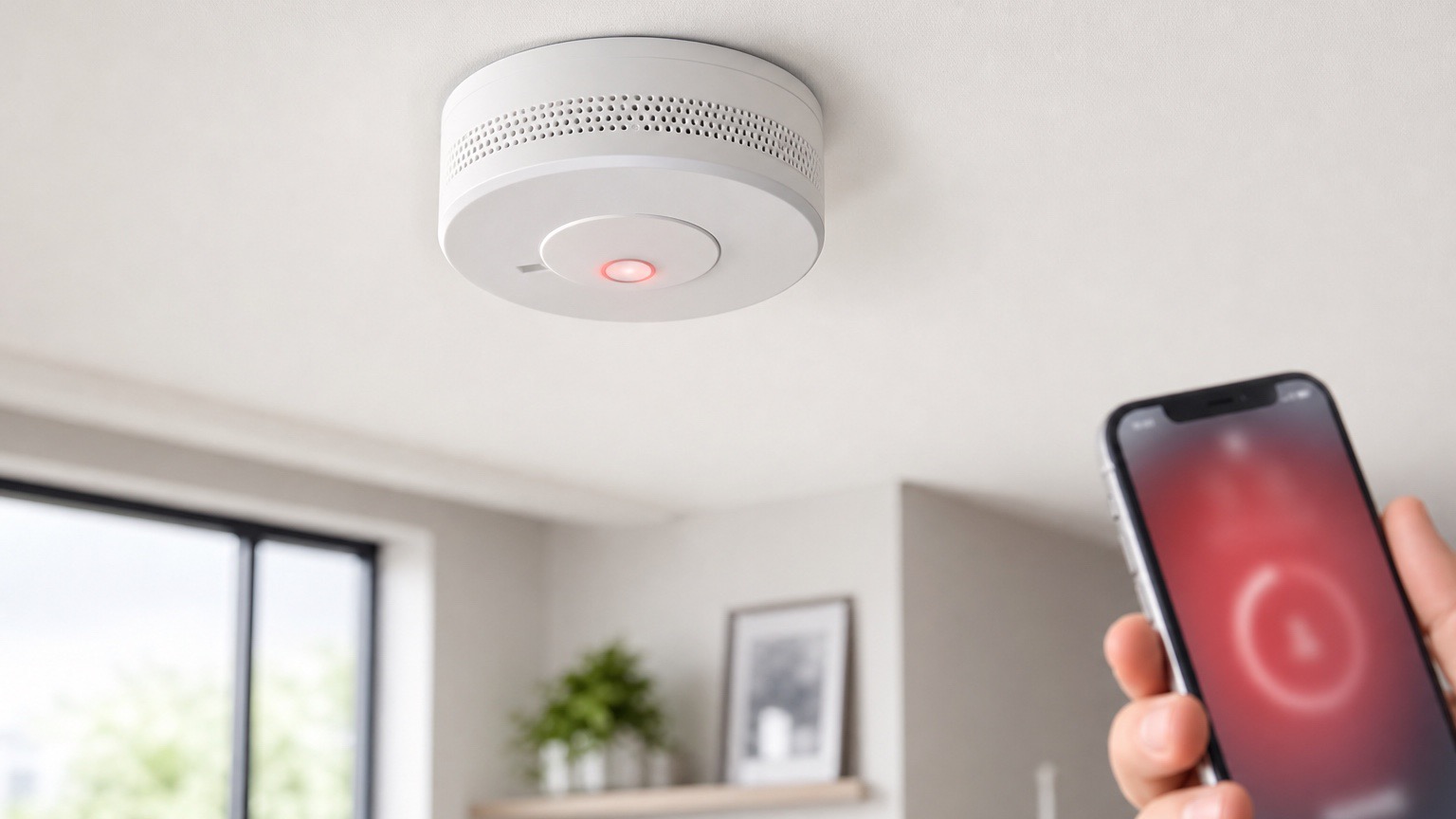
Smart smoke and carbon monoxide detectors have revolutionized home safety, offering early warning systems that can save lives while providing peace of mind through smartphone notifications. After extensive testing of the latest models, we've identified the top smart smoke detectors that deliver reliable protection, intelligent features, and seamless smart home integration.
Save 25% on Nest Protect through January 15th with code SAFETY2026
Quick Picks: Best Smart Smoke Detectors 2026

Google Nest Protect (2nd Gen)
$119
The gold standard for smart smoke detection, combining dual-sensor technology with carbon monoxide monitoring and exceptional smart home integration.
Pros
- Dual photoelectric and ionization sensors
- Carbon monoxide detection included
- Self-testing and auto-silencing features
- Excellent Google Assistant integration
- 10-year lithium battery life
Cons
- Premium price point
- Limited third-party integrations
- Requires Google account

First Alert Onelink Safe & Sound
$89
Feature-packed detector with Amazon Alexa built-in, offering smoke detection, carbon monoxide monitoring, and smart speaker functionality.
Pros
- Built-in Alexa voice assistant
- Premium audio with spatial enhancement
- Hardwired with battery backup
- Works with existing First Alert system
- Night light with motion detection
Cons
- Requires hardwired installation
- Bulkier design than competitors
- Limited smart home platform support

Kidde Smart Detect Smoke + CO
$95
Reliable smart detector with comprehensive smartphone app, featuring both smoke and carbon monoxide detection with advanced alert customization.
Pros
- Sealed lithium battery (10-year life)
- Smart hush feature via app
- Multiple alert types and customization
- Works with Kidde ecosystem
- Voice location announcements
Cons
- App interface could be more intuitive
- Limited smart home integrations
- Occasional connectivity issues reported

X-Sense XS01-WX Smart Smoke Detector
$45
Affordable smart smoke detector offering essential features, smartphone notifications, and reliable photoelectric sensor technology.
Pros
- Excellent value for money
- Easy installation and setup
- Reliable photoelectric sensor
- 10-year sealed battery
- Clear smartphone notifications
Cons
- No carbon monoxide detection
- Basic app functionality
- No smart home integration
- Smoke detection only
Why Smart Smoke Detectors Matter
Traditional smoke detectors can only alert people who are present in the home, but smart smoke detectors extend that protection by sending instant notifications to your smartphone wherever you are. This capability is particularly valuable for vacation homes, rental properties, or any time you're away from home for extended periods.
Modern smart smoke detectors also offer advanced features like:
- Self-testing capabilities that automatically check sensor functionality
- Intelligent silencing to prevent false alarms from cooking smoke
- Voice announcements that specify the location and type of danger
- Integration with smart home systems for automated responses
- Battery status monitoring with low-battery notifications
Key Features to Consider
Sensor Technology
The most important aspect of any smoke detector is its ability to detect fires quickly and accurately. There are three main types of sensors:
- Photoelectric sensors excel at detecting smoldering fires with thick smoke
- Ionization sensors respond faster to flaming fires with smaller particles
- Dual-sensor technology combines both methods for comprehensive protection
Smart Home Integration
Consider which smart home platforms you currently use or plan to adopt. The best smart smoke detectors integrate seamlessly with popular ecosystems like Google Home, Amazon Alexa, and Apple HomeKit, allowing you to create automated responses such as turning on lights or unlocking doors during emergencies.
Power Options
Smart smoke detectors typically offer three power configurations:
- Battery-powered: Easy installation, portable, but requires periodic battery replacement
- Hardwired: Permanent power with battery backup, professional installation recommended
- Sealed lithium: Long-lasting batteries (10+ years) that cannot be replaced
Smart Smoke Detector Comparison
| Model | Sensor Type | CO Detection | Battery Life | Smart Home Support | Price |
|---|---|---|---|---|---|
| Nest Protect | Dual Sensor | ✓ | 10 years | Google, Alexa | $119 |
| First Alert Onelink | Photoelectric | ✓ | Hardwired + Backup | Alexa Built-in | $89 |
| Kidde Smart Detect | Photoelectric | ✓ | 10 years | Limited | $95 |
| X-Sense XS01-WX | Photoelectric | ✗ | 10 years | None | $45 |
Installation and Setup Guide
Most smart smoke detectors follow a similar installation process, but specific steps vary by model. Here's a general guide:
- Choose optimal locations: Install detectors in every bedroom, hallway, and level of your home, following manufacturer spacing guidelines
- Download the companion app: Most smart detectors require a smartphone app for initial setup and ongoing management
- Connect to Wi-Fi: Follow in-app instructions to connect your detector to your home network
- Test functionality: Use the app's test feature or physical button to ensure proper operation
- Configure notifications: Set up alert preferences, emergency contacts, and integration with other smart devices
Install smart smoke detectors during daylight hours when Wi-Fi signals are typically strongest and you can easily test functionality.
Maintenance and Testing
Smart smoke detectors require minimal maintenance, but regular testing ensures reliable operation:
- Monthly testing: Use the app or physical button to test alarm functionality
- Keep sensors clean: Gently vacuum the detector monthly to remove dust and debris
- Monitor battery status: Check app notifications for battery level warnings
- Update firmware: Install app updates and firmware upgrades as they become available
- Replace units after 10 years: Even smart detectors have a recommended replacement timeline
Common Concerns and Solutions
False Alarms
Modern smart detectors include sophisticated algorithms to reduce false alarms, but occasional cooking-related alerts may still occur. Look for models with smart silencing features or the ability to temporarily disable alarms through the app.
Connectivity Issues
Ensure your home Wi-Fi network provides adequate coverage to detector locations. Consider Wi-Fi extenders for homes with dead zones, and choose detectors that support both 2.4GHz and 5GHz networks for better compatibility.
Privacy Concerns
Smart smoke detectors collect minimal data compared to other smart home devices, typically limited to alarm status, battery levels, and basic usage statistics. Review privacy policies and adjust data sharing settings in the companion app as needed.
Frequently Asked Questions
What is the best smart smoke detector for 2026?
The Google Nest Protect is our top pick for 2026, offering dual-sensor smoke detection, carbon monoxide monitoring, self-testing capabilities, and excellent smart home integration.
Do smart smoke detectors work without Wi-Fi?
Yes, smart smoke detectors will still function as regular smoke detectors during Wi-Fi outages. However, you won't receive smartphone notifications or be able to access smart features until connectivity is restored.
How often should smart smoke detector batteries be replaced?
Most smart smoke detectors use lithium batteries that last 10+ years. Battery-powered models typically need replacement every 1-2 years, while hardwired models have backup batteries lasting 3-5 years.
Can smart smoke detectors be interconnected?
Many smart smoke detectors can be interconnected wirelessly, so when one alarm activates, all connected units will also sound. This feature is particularly useful in larger homes where a single alarm might not be heard throughout the entire house.
Are smart smoke detectors worth the extra cost?
Smart smoke detectors provide significant value through remote monitoring, intelligent alerts, and integration with home automation systems. The ability to receive notifications when away from home alone justifies the investment for most homeowners.
Our Testing Methodology
Our recommendations are based on comprehensive testing that includes:
- Sensor accuracy: Response time testing with controlled smoke sources
- App functionality: User interface evaluation and notification reliability
- Smart home integration: Compatibility testing with major platforms
- Build quality: Long-term durability and design assessment
- Value analysis: Feature comparison relative to price point
We maintain strict editorial independence and only recommend products we would use in our own homes. All testing is conducted in controlled environments following industry safety standards.