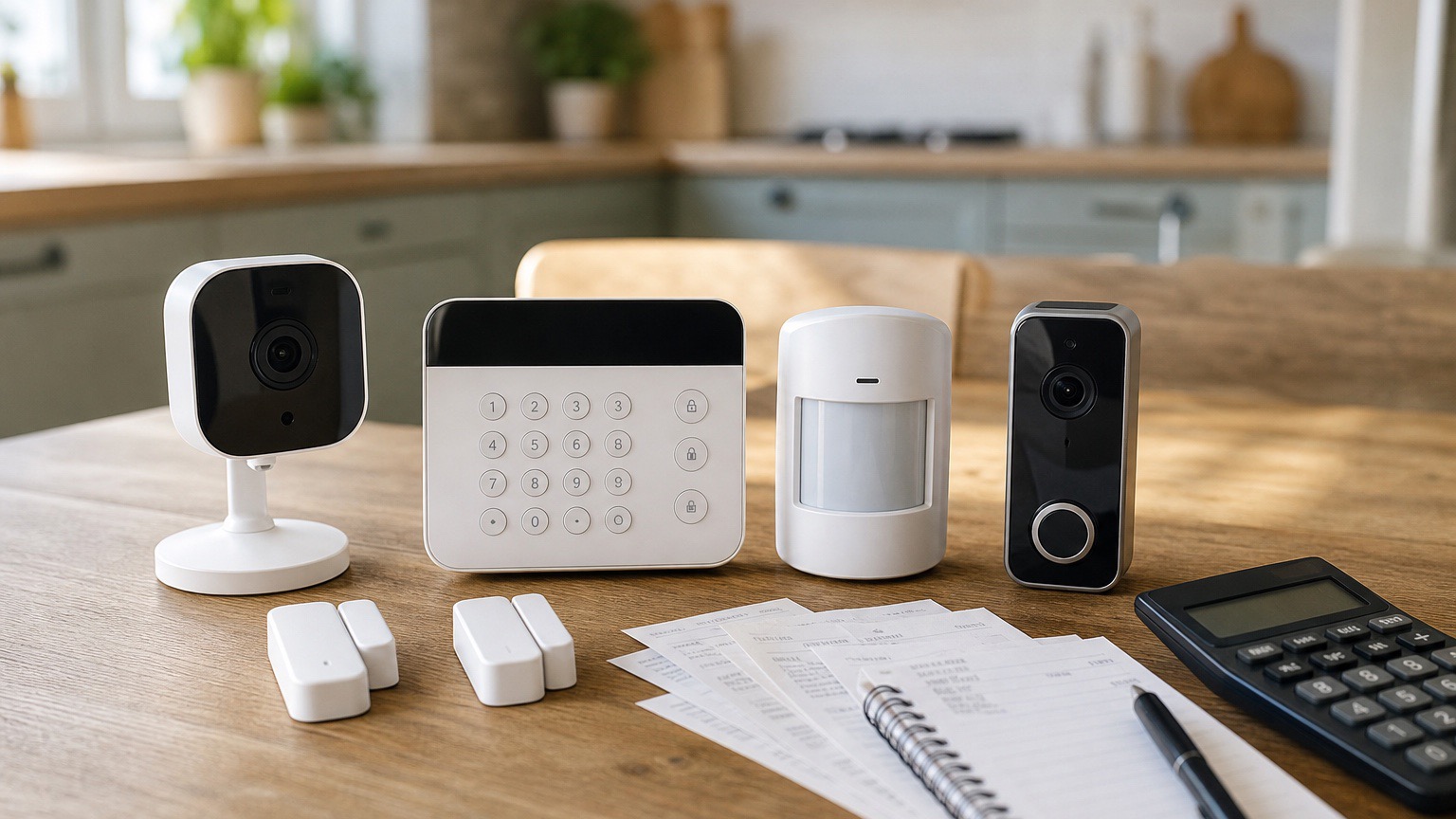
A smart home security system can cost a few hundred dollars total or several thousand over three years. The difference is not just the starter-kit price. It is the number of sensors and cameras you need, whether you pay for professional monitoring, and whether camera storage carries its own subscription. For most households in 2026, a realistic budget is $350 to $700 upfront, then $0 to $33 per month.
This research-based pricing snapshot was checked July 22, 2026. Hardware promotions and plan availability change often. Use these figures to plan your budget, then verify the final cart and plan terms before buying.
The Quick Answer: What Home Security Costs
A practical 2026 budget
- Basic self-monitored setup: $180 to $450 upfront, then $0 per month.
- Typical DIY system with professional monitoring: $350 to $700 upfront, then about $20 to $33 per month.
- Camera-heavy or premium monitored setup: $600 to $1,200+ upfront, then roughly $33 to $50+ per month.
- Professional installation: commonly optional for DIY systems, but budget $100 to $300 when it is not included.
A strong value target is $1,100 to $1,600 over three years: a DIY alarm, sensible sensor coverage, one or two cameras, and professional monitoring.
Three-Year Cost Examples
These are planning ranges, not quotes. The right sensor count depends on your exterior doors, accessible windows, pets, and whether you want cameras indoors, outdoors, or both.
| Setup | Upfront equipment | Recurring plan | Estimated 3-year total |
|---|---|---|---|
| Self-monitored starter setup Alarm kit and one camera | $180 to $450 | $0 | $180 to $450 |
| DIY monitored setup Alarm, 4 to 6 sensors, camera | $350 to $700 | $19.99/month | $1,070 to $1,420 |
| Expanded family setup More sensors, doorbell, two cameras | $500 to $900 | $22.99 to $32.99/month | $1,328 to $2,088 |
| Premium proactive protection Outdoor cameras and higher-touch monitoring | $600 to $1,200+ | about $49.99/month | $2,400 to $3,000+ |
Those totals exclude sales tax, optional installation, replacement batteries, and municipal alarm permits. A credible kit sale can move the total more than a small monthly-plan difference, so compare the three-year number before signing up.
What You Pay Upfront
A starter kit is only a starting point. A typical three-bedroom home may need a base station, keypad or app control, four to six contact sensors, one motion sensor, and a camera or doorbell. Cover actual entry points before spending on a collection of overlapping cameras.
| Component | Typical planning range | Why it matters |
|---|---|---|
| Starter alarm kit | $180 to $450 | The hub and basic entry coverage that make future add-ons possible. |
| Extra entry sensors | $15 to $40 each | Cover exterior doors and the most accessible windows first. |
| Motion sensor | $25 to $60 each | Useful for a main hallway or central living area. |
| Video doorbell or camera | $50 to $250 each | Adds visual confirmation, delivery visibility, and deterrence. |
| Smart lock or safety sensor | $100 to $350 | A helpful convenience or safety upgrade, not a replacement for core intrusion coverage. |
Monitoring Is the Cost That Changes the Total Most
Self-monitoring is free with many systems. Your phone receives the alert and you decide whether to call a neighbor, emergency services, or a locksmith. It suits people who are usually reachable and comfortable managing alerts.
Professional monitoring adds a staffed response path, cellular backup on eligible plans, and sometimes camera or video features. It is easier to justify for frequent travelers, busy families, and anyone who does not want a security outcome to depend on noticing a phone notification.
| Provider or plan type | Current monthly reference | What to confirm before subscribing |
|---|---|---|
| Ring Protect Pro | $19.99/month | Monitoring eligibility, cellular backup details, and which devices at your address are covered. |
| SimpliSafe Standard | $22.99/month | Current system compatibility and the services included for your device generation. |
| SimpliSafe Core | $32.99/month | Whether its added response and camera features solve a real need for your home. |
| SimpliSafe Pro | about $49.99/month | Whether active outdoor protection is genuinely valuable for your property. |
Plan names and features change. Do not assume a camera-recording plan includes professional alarm monitoring, or that a monitoring plan includes every camera feature you want. Read the plan comparison for the exact devices in your cart.
Camera Storage Can Be a Separate Bill
Camera subscriptions are easy to miss because an alarm system and a camera can use different plans. Decide whether you need longer cloud history, person detection, package alerts, or local storage. Local storage can reduce recurring cost, while a paid plan may be worthwhile when recorded evidence and richer alerts matter more.
Budget for alarm monitoring and camera storage separately unless the provider explicitly bundles them. This is particularly important when you use an alarm system from one company and cameras from another.
Installation, Permits, and Other Costs
- Professional installation: commonly $100 to $300 when billed separately.
- Alarm permits: some cities require one. Check local government or police guidance before activating professional dispatch.
- False-alarm fees: local rules differ, so make sure everyone in the household knows how to disarm the system.
- Batteries and mounts: modest costs, but worth counting for systems with many wireless sensors or outdoor cameras.
- Insurance: ask your insurer about any monitored-security discount, then compare actual savings against the plan cost.
How to Choose the Right Budget
Choose self-monitoring when you are reachable
A self-monitored kit makes sense when you want a low recurring bill, are comfortable acting on alerts, and mainly need visibility at doors, windows, and a few high-priority areas. Put the saved monthly cost into better placement or a more reliable camera.
Pay for monitoring when response coverage matters
Professional monitoring is a better fit when the house is empty often, household members may not respond to alerts, or you want a designated escalation path. Focus on the response service first, then add premium features only if they solve a specific problem at your home.
Do not overspend on cameras before covering entry points
For most homes, a well-covered front door, accessible back door, and main living area matter more than a collection of cameras with overlapping views. Start with the risks you can name, then expand after a few weeks of living with the system.
Five Ways to Spend Less Without Cutting the Important Stuff
- Build around the entry points you actually use. Count doors, accessible windows, and one or two rooms that need motion coverage.
- Separate equipment sales from plan decisions. Buy hardware during a credible sale, but do not keep a plan you do not need just to chase a bundle.
- Compare the three-year total, not just month one. A low kit price can disappear after years on a higher recurring plan.
- Use local storage where it fits. It can lower subscriptions, but make sure the alert and storage experience meets your needs.
- Leave room for expansion. An easy-to-expand system can be less expensive than replacing an undersized kit later.
Bottom Line
There is no single correct home-security budget. A careful self-monitored setup can cost a few hundred dollars total, while a professionally monitored, camera-heavy system can run into the low thousands over three years. The best value is usually a modest DIY system sized to your actual entry points, paired with a monitoring plan only when the response coverage is worth the recurring cost.
For model-by-model recommendations, read our best smart home security systems guide. If recurring fees are your deal-breaker, start with our no-monthly-fee security picks. For cameras, see the best outdoor security cameras.
Frequently Asked Questions
How much does professional home security monitoring cost per month?
A realistic 2026 range is about $20 to $50 per month. Ring Protect Pro is listed at $19.99 monthly, while SimpliSafe's Standard and Core plans are $22.99 and $32.99 monthly. Higher-touch outdoor-protection plans can cost about $49.99 monthly. Confirm plan compatibility before checkout.
Can I have a security system with no monthly fee?
Yes. Many systems can be self-monitored without a monthly plan. You still pay for equipment, and camera recording or advanced alerts may require a separate subscription depending on the brand.
What is a realistic first-year budget?
For a solid DIY system with a few sensors and professional monitoring, budget roughly $600 to $1,100 in the first year. A self-monitored starter setup can cost much less, while a camera-heavy or premium monitored setup will cost more.