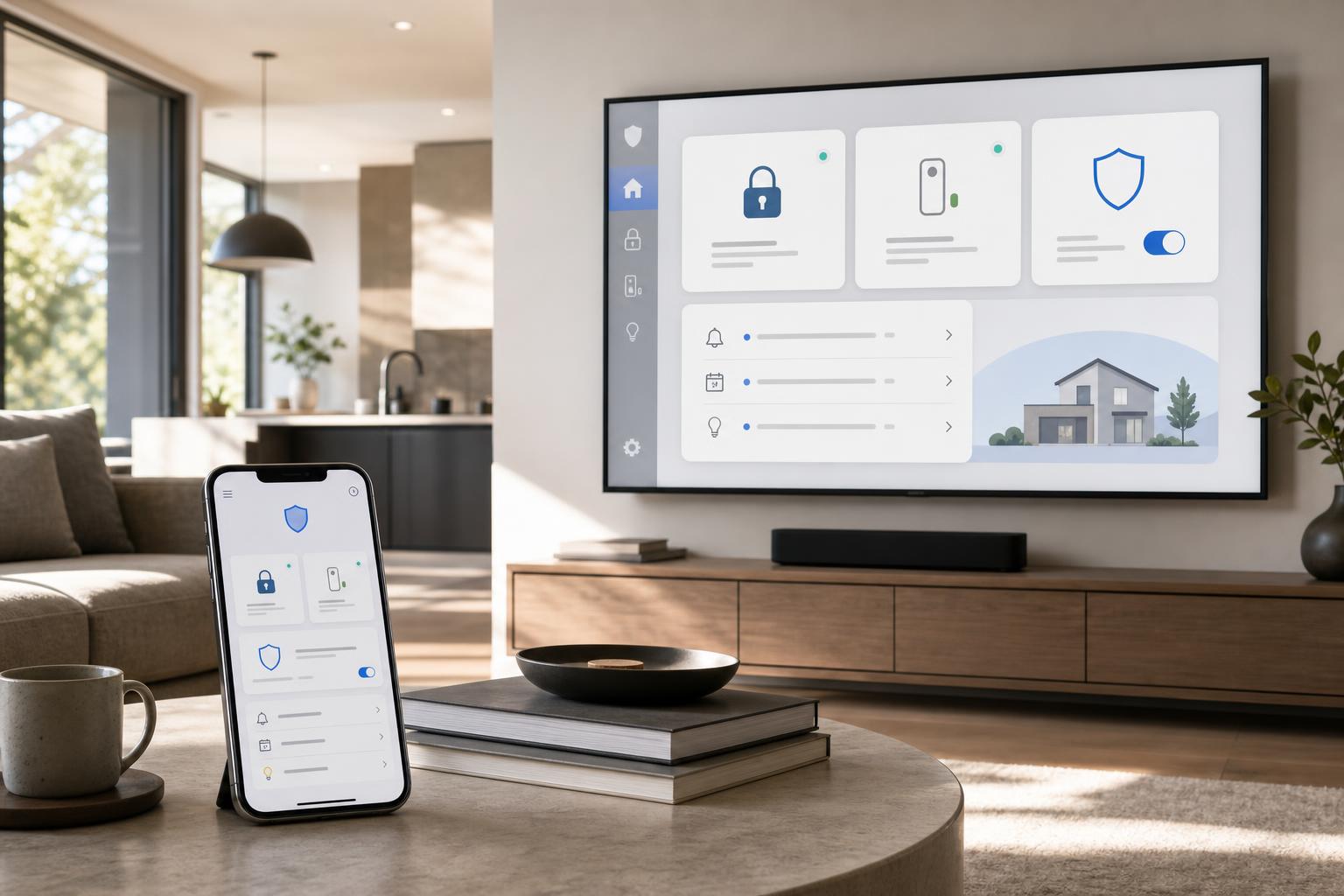
Samsung's latest SmartThings update turns Now Brief into a lightweight home-security dashboard for Galaxy households. Officially, Samsung says Home Security joins Family Care and Pet Care in Now Brief with the Galaxy S26 series, and the same glanceable experience is set to roll out in phases to newer Samsung TVs and Family Hub refrigerators. For homeowners, that means door-lock status, door-sensor activity, and security-mode updates may surface before you ever open the SmartThings app.
This is not a new alarm system, and it is not a reason by itself to replace a setup that already works. But it is a meaningful platform move. Smart home security is increasingly about how quickly the right person sees the right context, not just which sensor fired an alert. Samsung is trying to make SmartThings feel more proactive, more ambient, and harder to ignore in a busy household.
The Short Version
- Samsung says Now Brief will support Home Security alongside Family Care and Pet Care on the Galaxy S26 series.
- Samsung also plans to bring Now Brief to 2024-or-newer TVs and 2021-or-newer Family Hub refrigerators in phases.
- The official home-security examples focus on door locks, door sensors, and security mode. Some follow-up coverage describes broader smart-home security device summaries, but buyers should treat Samsung's own wording as the most reliable current guide.
- This matters most for households already using both SmartThings and Samsung screens. It matters far less if your security setup lives mostly inside Ring, Nest, Arlo, or Apple Home.
What Samsung Actually Announced
In coverage of Samsung's April SmartThings update, the company said Now Brief will deliver home device status and "Home Security updates based on door locks, door sensors, and security mode" as part of a broader intelligence push. The same announcement tied the feature to the Galaxy S26 launch and said rollout to compatible TVs and Family Hub refrigerators would happen in phases.
That is a practical detail, not marketing filler. A security platform is more useful when alerts and status summaries show up on the screens people already glance at, especially first thing in the morning or when they walk back into the house. Samsung is clearly betting that a phone lock screen, living-room TV, and kitchen display can become softer but more frequent touchpoints for home security than a dedicated app tab.
Follow-up coverage from GSMArena framed the update as broader SmartThings integration for security devices and household monitoring. That broader interpretation may prove accurate in day-to-day use, but homeowners should not assume every camera, doorbell, or sensor workflow suddenly becomes smarter overnight. The official announcement is narrower than the most enthusiastic summaries.
Why This Matters More Than It Looks
Most smart home platforms still make users do too much hunting. A lock event happens, a sensor triggers, or a mode changes, and the useful information is technically available, but only after you open the right app, tap the right room, and remember where the status lives. That is manageable for enthusiasts and annoying for everyone else.
Samsung's move matters because it tries to reduce that friction. If the platform can surface a clean security snapshot without requiring active app behavior, SmartThings becomes more useful to normal homeowners and not just to people who like building routines for fun. That is also why Google's AI-heavy home-security direction and Apple Home's steady quality-of-life improvements are worth tracking in parallel. The platform race is shifting from raw device count to whether the ecosystem helps you notice what matters at the right moment.
For buyers comparing ecosystems today, that context matters almost as much as hardware. A household choosing between Google Home and Nest, a broader whole-home security system, or a more modular setup built around sensors and smart locks should care about where the daily experience is heading, not only which box is cheapest this week.
What "Home Security" Seems To Mean Here
Samsung's own wording points to a summary layer rather than a full security redesign. The company specifically calls out door locks, door sensors, and security mode. In plain language, that suggests Now Brief is meant to answer questions like: Is the house armed? Did someone leave a door unsecured? Did anything change overnight that deserves attention before I leave?
That is useful, but it is not the same thing as turning Now Brief into a professional monitoring console. Buyers should not assume this replaces detailed live views, event history, camera-specific settings, or emergency workflows inside the main SmartThings app and connected device apps. Think of it more as an ambient summary layer that could reduce missed details and make the platform feel more coherent.
The rollout language matters too. Samsung says availability can vary by product, model, region, and software-update timing. That usually means real-world support will arrive unevenly, especially for households with mixed device generations. Anyone buying today should expect a staggered rollout instead of a single clean switch-on moment.
Who Should Pay Attention Now
Pay attention now if your household already uses a recent Galaxy phone, Samsung TV, or Family Hub screen alongside SmartThings-connected locks, sensors, or cameras. For that audience, at-a-glance security summaries could become one of those small quality-of-life features that makes the ecosystem feel easier every day.
This is also worth tracking if you are choosing between smart-home ecosystems and you value shared household screens. Samsung has a real advantage in the number of surfaces it controls. Phones, TVs, kitchen displays, and appliances can all become part of the same security story, which is something competitors still handle unevenly.
Who Should Wait
Wait if you are outside the Samsung ecosystem or if your current security setup already works well without extra summary cards. A Now Brief update is not a strong enough reason to abandon existing Ring, Arlo, Nest, SimpliSafe, or Apple Home gear by itself.
You should also wait if your main concern is camera performance, subscription cost, or local recording. Those core buying questions still matter more than an AI-curated dashboard. A better glanceable interface can improve the experience around a product, but it does not erase weak battery life, mediocre app reliability, or expensive cloud plans.
Should This Change What You Buy in 2026?
For most shoppers, not yet. If you need a new camera, lock, or alarm system today, buy based on today's reality: recording options, subscription pricing, app behavior, detection reliability, ecosystem compatibility, and how much setup friction you are willing to tolerate. Samsung's update is a helpful signal, but it is still a signal.
Where it could change the decision is on the margin. If you were already leaning Samsung, or you want a home-security platform that can show useful status on more than a phone, SmartThings now has a stronger lifestyle argument than it did a year ago. That will be especially relevant if Samsung expands these summaries cleanly to more device types and keeps the information accurate rather than noisy.
The safest homeowner takeaway is simple: treat this as a platform quality upgrade, not a surprise product launch. It makes SmartThings more interesting. It does not magically make every Samsung-friendly security setup the best option for every house.
What SmartGuard HQ Is Watching Next
There are three follow-up questions that matter. First, how quickly do the home-security cards roll out in the real world across Galaxy phones, TVs, and refrigerators? Second, how broad does the device support actually get once households start using it beyond Samsung's launch language? Third, does the feature reduce alert fatigue, or does it just move the same noise to a bigger screen?
Those answers will determine whether this becomes a real differentiator or just another respectable SmartThings bullet point. For now, the update is meaningful because it shows where Samsung thinks smart home security is headed: less buried in menus, more woven into the screens people already use.
FAQ
Does Now Brief replace the SmartThings app or professional monitoring?
No. Based on Samsung's announcement, it works more like a summary layer for home status and reminders. Homeowners should still expect to use their primary apps for detailed camera views, settings, and emergency workflows.
Which devices seem to be required?
Samsung tied the new Home Security support to the Galaxy S26 series and said phased rollout is coming to TVs launched in 2024 or later and Family Hub refrigerators launched in 2021 or later. Device registration in SmartThings and service activation are also required.
Should Ring or Nest owners switch to Samsung because of this?
Not on this feature alone. It is a nice ecosystem upgrade, but hardware quality, subscription costs, local recording options, and platform fit still matter more than a glanceable status card.